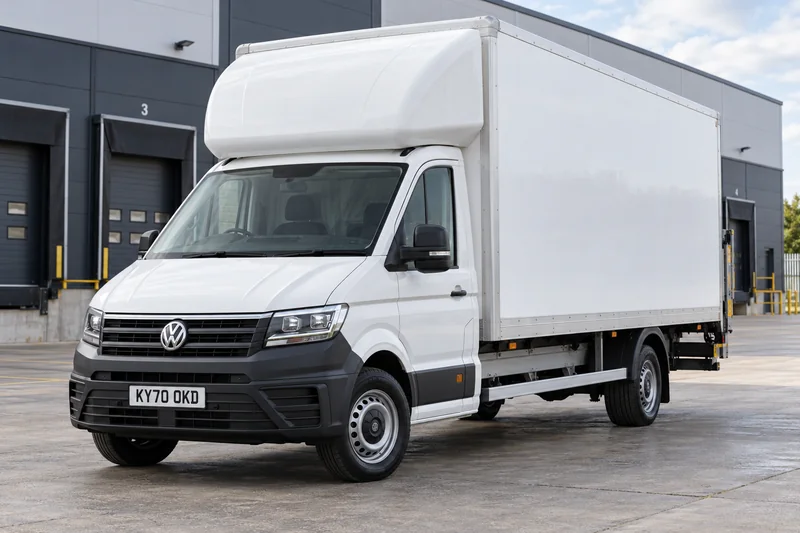

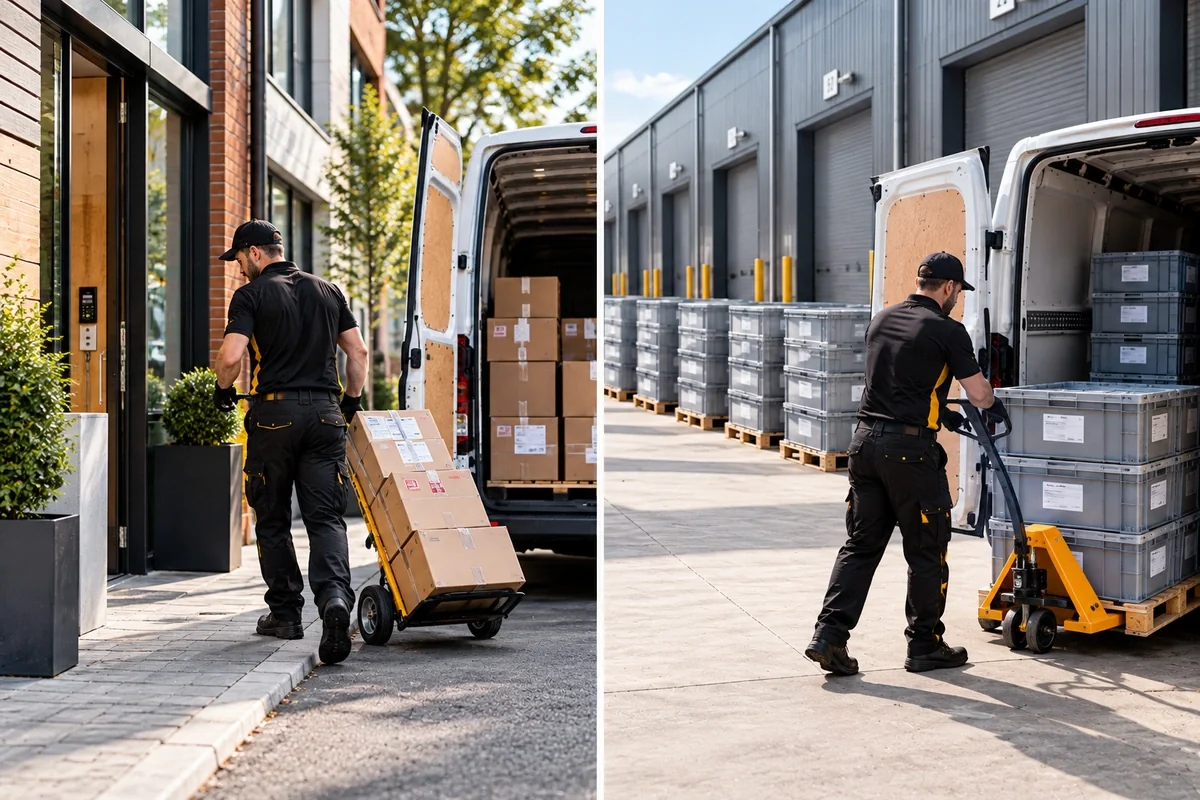
Start with the business requirement
Ask what must happen at the receiving address and by when. An urgent replacement part may need a direct vehicle today. Stock for several shops may suit one planned route. A recurring supplier collection may need the same agreed window each week.
For office computers, servers and networking hardware, explore our it equipment courier service.
The goods matter too. Documents, boxed stock, fragile equipment and pallets need different vehicle or handling arrangements. Give the provider the actual load details rather than asking for a generic business delivery service.
If you are comparing providers, our business courier service guide covers vehicle suitability, communication, delivery records and questions to ask about the full quote.
Match the delivery pattern to the service
| Business need | Service to discuss |
|---|---|
| One urgent collection and delivery | Dedicated same day transport |
| A deadline or restricted receiving slot | Time critical delivery |
| Several addresses on a planned route | Multidrop delivery |
| Predictable repeat movements | Scheduled contract runs |
| Bulky goods needing extra assistance | Suitable vehicle and two-person crew |
Explore RGP Trans delivery services for the options. A route may combine requirements, but each stop, deadline and handling task needs to be included when the transport is planned.
Give your office a consistent booking brief
Keep a standard brief with both addresses, contacts, order references, item quantities, dimensions, weight and timing. Include access instructions for regular sites. Clear details let the team quote and allocate transport without repeating the same questions.
Check the instructions when a familiar delivery changes. A heavier load, different entrance or absent receiving staff can make yesterday's plan unsuitable. For oversized goods, use the fleet guide and confirm the fit and handling rather than reusing the last vehicle by default.
For a repeat customer, keep the delivery instructions with the order but check them before each booking. A different quantity, altered opening hours or temporary site restriction can change the transport plan. The reference should identify the actual consignment, not simply repeat the details of a previous journey.
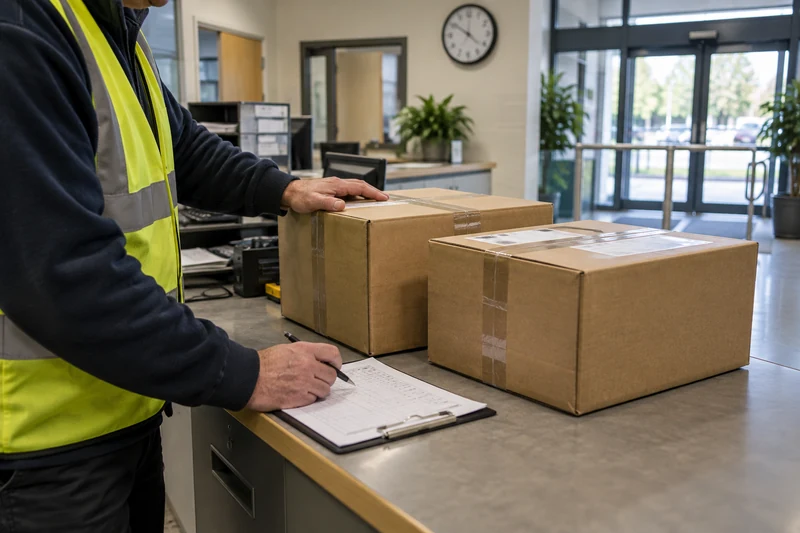
Keep the delivery record useful to the business
Live GPS tracking helps the office understand progress while electronic proof of delivery records the handover. Agree any customer-specific references, photographs or notification requirements before booking so the record can be matched to the order.
Account customers can use the client portal for booking-related tasks. Access and account arrangements are confirmed with the team. For general questions about payments, insurance and support, see the courier FAQ.
Review repeat work rather than repeating urgent bookings
List the actual collection days, locations and load volumes. Share the receiving windows and anything that varies. Contract runs can be assessed for recurring work; multidrop delivery can suit several stops on one movement.
For one-off work, same day delivery remains available without opening an account. The small business courier guide explains how to choose between routine and urgent orders. Pricing depends on the agreed work, so ask for a quote that includes the full route and handling.
Keep changes visible to everyone involved
Before repeating a familiar job, check the consignment and receiving instructions. A different load weight, changed loading bay or shorter opening window can make the previous plan unsuitable. Include the actual package count and any returns so the vehicle and route are assessed for this booking.
Name one contact at each end and keep the agreed reference with the quote and proof of delivery. If several departments are involved, identify who can release and accept the goods. Card payments are accepted, with instructions supplied by the team; recurring account arrangements and terms are agreed separately. Clear confirmation is more useful than assuming last week's price or schedule still applies.
Your booking brief
Check the details you have ready. The team can help with anything still to confirm.
Common questions
Do business deliveries require a monthly contract?
No. RGP Trans accepts one-off enquiries as well as discussing recurring work and account arrangements.
Can the route include several suppliers or customers?
Yes, subject to route planning, loads and receiving windows. Include every address when requesting the quote.
Can you deliver throughout mainland UK?
We arrange mainland England, Scotland and Wales movements. Timing and vehicle suitability are confirmed for the individual booking.
Can a business pay by card without an account?
Yes. RGP Trans accepts card payments and one-off enquiries. Ask for payment instructions when confirming the quoted work. If you want recurring account arrangements, discuss them with the team; a one-off booking does not automatically establish credit terms.
How do we arrange recurring collections?
Share the actual collection days, addresses, load volumes and receiving windows. Explain what varies and any expected returns. The team can assess a planned arrangement from that pattern rather than assuming that every recurring order needs the same vehicle or route.
What happens if our load changes after quoting?
Tell the team before dispatch where possible. A change in dimensions, weight, stops or handling may require another vehicle or a revised quote. Keep the updated confirmation with the booking reference so sender and recipient use the same instructions.
RGP Trans provides dedicated courier transport across mainland UK. This guide helps you prepare an enquiry; the vehicle, timing, handling and price are confirmed for your booking. Speak to the team about your requirements.