
Describe the item rather than just calling it large
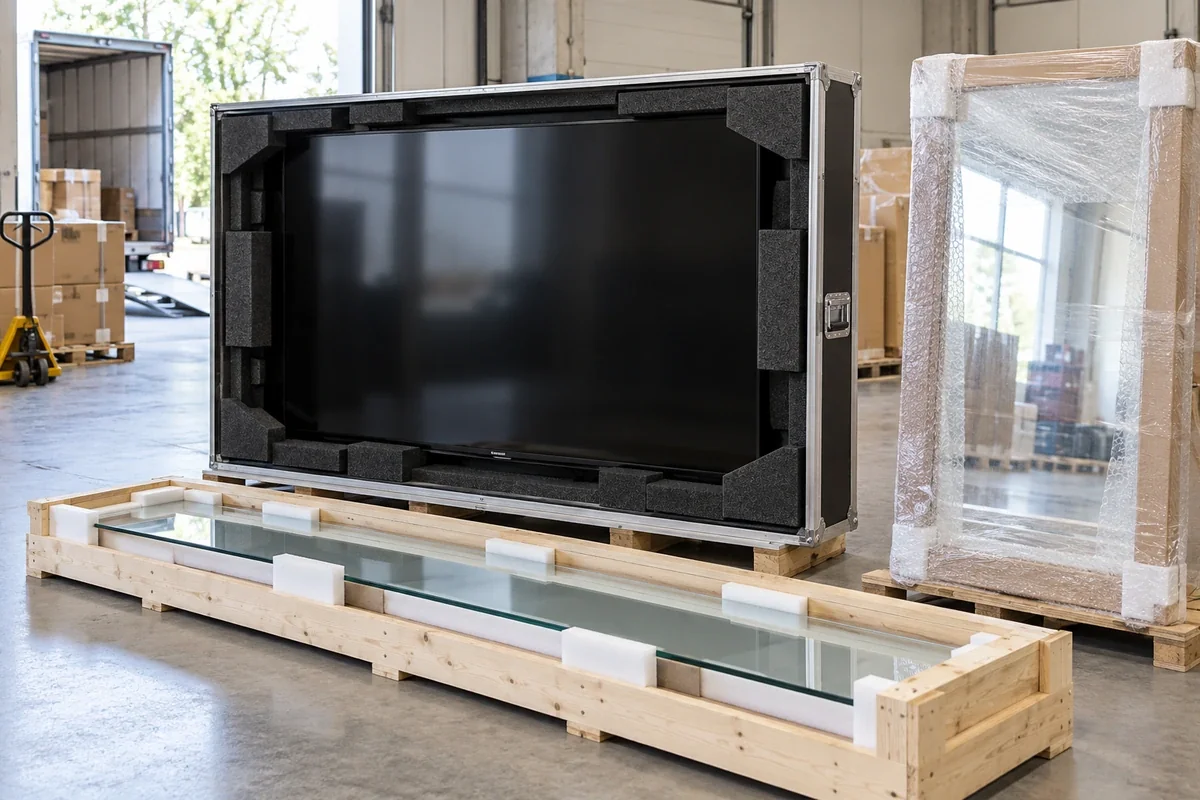
A commercial sign, a wrapped sideboard and a boxed display screen may have similar dimensions but different handling needs. Give the packed length, width, height and weight. Say whether the item must stay upright, whether it has fragile surfaces, and whether it can be safely lifted or needs mechanical handling.
For finished doors, cabinet units and protected panels, explore our joinery courier service.
Photos are especially useful for awkward shapes, exposed corners and custom packaging. They help the team understand what is being transported without guessing from a product name. See examples of goods we carry for the types of business consignments we assess.
Choose the handling level before choosing the vehicle
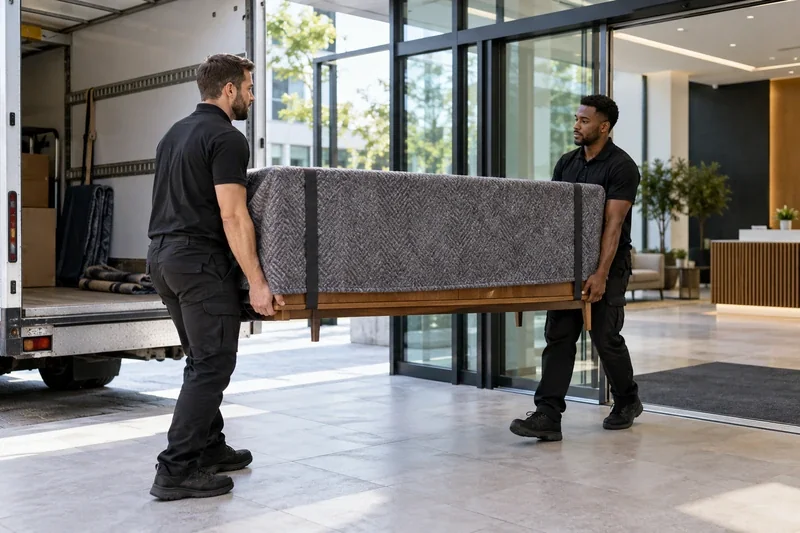
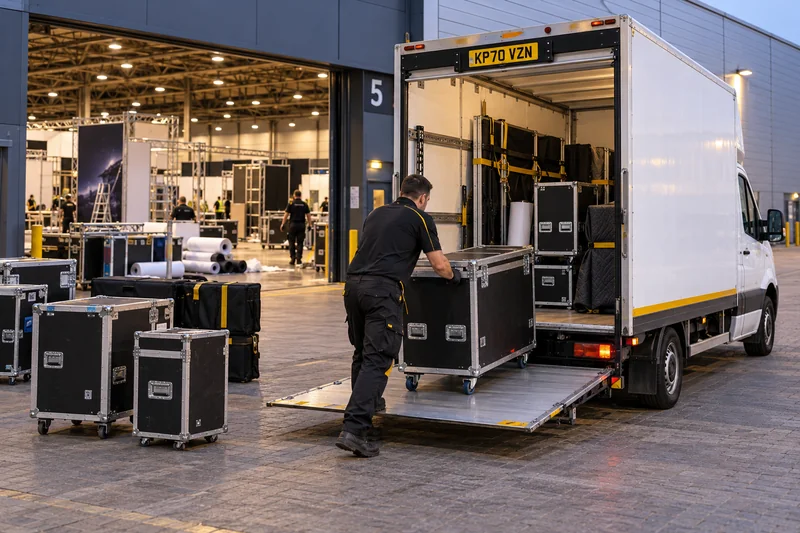
A dedicated van journey suits an item that needs direct delivery without depot transfers. A two-person crew may be needed where one driver cannot safely manage the handover. A palletised item may need a tail lift or equipment supplied by the sender and recipient.
Extra handling is not automatically included because the item is bulky. Agree exactly what the crew will do, where delivery ends and who is providing assistance. The white glove delivery guide explains why unpacking, placement and assembly must each be discussed separately.
Match the arrangement to the item
| Load or access issue | What to confirm |
|---|---|
| Long signs or panels | Packed dimensions, door opening and protection for faces and edges |
| Palletised machinery or equipment | Total weight, handling equipment and safe unloading space |
| Furniture that needs carrying | Crew size, carry distance, stairs and receiving point |
| Fragile screens or artwork | Protective packaging, orientation and declared value |
Use the fleet dimensions and capacities as a guide, then ask the team to confirm the actual fit. Packaging, load restraints and equipment all use space; the item's bare dimensions are not enough.
Check the doorway, not just the postcode
Tell us whether collection is from a loading bay, workshop, shop or home. At delivery, check parking, loading restrictions, doors, lifts, stairs and the distance from the vehicle to the agreed handover point. A clear photograph of a tight entrance can resolve questions early.
For a fit-out or installation, share the time the crew will be on site and the deadline for accepting the goods. Time critical delivery can be planned around a receiving window, with an estimated arrival agreed against the route.
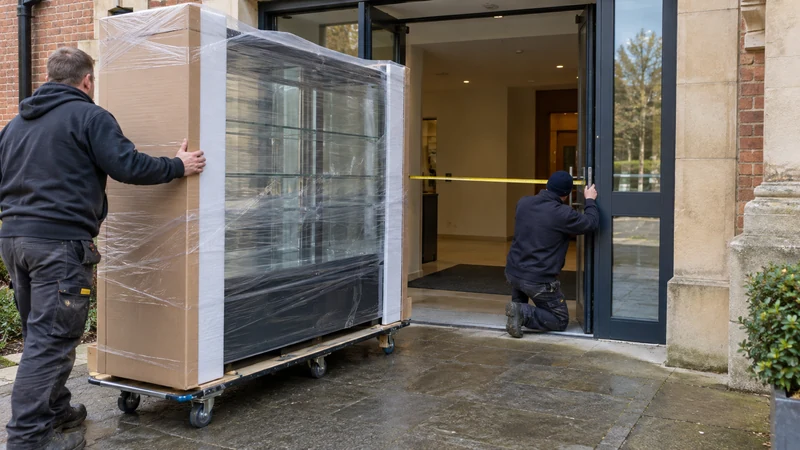
Consider a boxed commercial display going to an office. Its transport dimensions may be straightforward, while the loading entrance has a narrow turn or the lift is too small. Agree a practical handover point with the recipient before collection; changing the destination room after dispatch can change the crew and time required.
Protect the item and agree the quote
Use packaging appropriate to the item: protect edges, immobilise loose components and keep surfaces from rubbing against packaging or other parts. Declare high-value and fragile contents before booking so handling and relevant cover can be checked.
The quote depends on vehicle size, distance, timing and the agreed handling. A lifting crew, waiting or restricted access can change the plan. Send complete details through the quote form. If the goods are on a pallet, our same day pallet delivery guide covers the additional information needed.
Where does delivery end?
Agree the exact receiving point before booking: a loading bay, entrance or a specifically assessed carry into the premises. State stairs, lifts, narrow turns, surface conditions and the distance from parking. A vehicle large enough for the item does not automatically provide the people or equipment needed to move it through the property.
For example, a protected display may fit in a panel van but need two people to guide it through a tight doorway. Send photographs and packed measurements of the access route. If the dimensions, packaging or destination change after the quote, ask the team to reassess the plan before collection rather than expecting the original arrangement to cover extra work.
Your booking brief
Check the details you have ready. The team can help with anything still to confirm.
Common questions
Can a courier move furniture or appliances?
Yes, where the load, packaging and access are suitable. Dimensions, weight and handling requirements must be confirmed before booking.
Will the driver carry the item upstairs?
Do not assume this is included. Tell us about stairs and the destination room so crew size, access and the delivery scope can be assessed.
Are fragile large items insured?
Tell the team the contents and value before booking so the relevant goods-in-transit cover and any additional cover can be checked.
What measurements should I send?
Give the packed length, width, height and total weight, plus the number of separate items. Explain projections, fragile surfaces and anything that must remain upright. A photograph helps with shape, but it does not replace measurements or weight.
Will the courier provide packaging?
Prepare suitable protection before the agreed collection and discuss anything you cannot provide when enquiring. Do not assume packing, crating or protective materials are included. The team needs to know the item condition and proposed packaging before confirming acceptance.
Can the courier take an old item away as well?
Declare the return or removal requirement in advance, including contents, condition, size and destination. It is a separate movement to assess; a delivery booking does not automatically include disposal, waste collection or taking another item away.
Further reading
RGP Trans provides dedicated courier transport across mainland UK. This guide helps you prepare an enquiry; the vehicle, timing, handling and price are confirmed for your booking. Speak to the team about your requirements.