
Identify the battery and its transport configuration
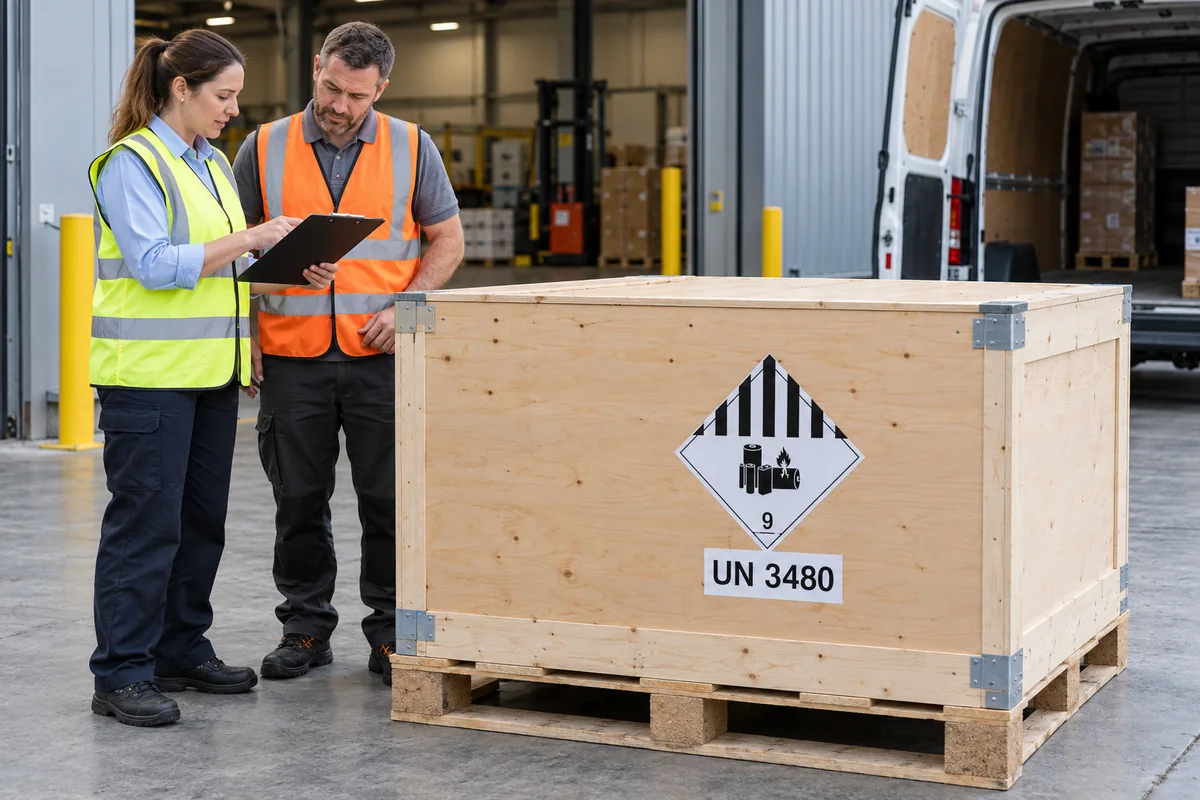
Give the chemistry, manufacturer, model and capacity information available from the supplier. Explain whether batteries travel on their own, with the equipment they power or installed in that equipment. For ordinary lithium-ion consignments, UN 3480 describes standalone batteries; UN 3481 covers relevant packed-with-equipment or contained-in-equipment configurations. Lithium-metal batteries use different entries.
The sender’s competent assessment must establish the correct classification for the actual shipment. A charger, cable or product description alone does not settle it. The IATA battery guidance explains common definitions and UN entries, but its air-transport limits must not be applied as road-transport instructions.
Declare condition, returns and unusual consignments
Say whether the batteries are new, used, returned, recalled, damaged or being sent for recycling or disposal. A service return is not automatically the same as an intact replacement leaving the manufacturer. Any swelling, leakage, impact damage or known safety issue must be declared before a transport enquiry is accepted.
Do not book damaged or defective batteries, waste batteries or unknown-condition packs as a routine collection. RGP Trans must assess what, if anything, can be accepted with the relevant specialist advice. A return journey needs its own description and acceptance; the outbound battery’s paperwork does not establish the condition of the item coming back.
Have the shipment assessed before preparing the handover
UK government guidance places responsibility for dangerous-goods classification, packaging and marking with the consignor. Obtain the applicable preparation instructions from the responsible supplier or competent adviser. The required marks, labels and documents depend on the actual consignment; copying a label from an illustrative photo is not a compliance check.
Provide the UN number and proper shipping name established for the shipment, quantities, packed dimensions, gross weight and relevant manufacturer or transport documents requested during assessment. Explain any missing information early. See the UK dangerous goods guidance and discuss the load through our ADR courier service before arranging release.

Match the road journey to the receiving arrangements
Road transport is governed by the applicable ADR framework; air and sea movements have separate requirements. Do not assume a rule quoted for an airline shipment applies to a dedicated van journey. Any proposed exception or special arrangement needs assessment against the current rules for the particular goods and route.
For an accepted palletised battery collection, confirm the supplier’s release point, receiving workshop, packed weight and unloading method. A pump truck needs a suitable handling surface, and a tail lift must be appropriate for the actual load. The vehicle guide explains general space and payload considerations, but does not confirm dangerous-goods acceptance.
Request a battery transport assessment before a collection time
RGP Trans has in-house Dangerous Goods Safety Adviser support and assesses suitable ADR consignments before booking. Our ADR scope excludes Classes 1 and 7. For battery-specific examples, see the chemical industry and dangerous-goods courier page. A general quote request is not permission to dispatch an undeclared or unaccepted load.
Send both postcodes, the goods-ready time, receiving deadline, package count and the battery information above. An urgent lithium-ion battery delivery still needs a suitable vehicle and confirmed acceptance. Contact the team for assessment before sending the goods, then agree the collection, handling and price for the accepted movement.
Your booking brief
Check the details you have ready. The team can help with anything still to confirm.
Common questions
Can a lithium battery travel by courier in the UK?
Suitable consignments can be assessed for road transport, but not every courier or service accepts them. Declare the battery details, condition and packaging before a booking is confirmed.
What is the difference between UN 3480 and UN 3481?
For ordinary lithium-ion shipments, UN 3480 refers to standalone batteries. UN 3481 covers relevant batteries packed with or contained in equipment. The sender must confirm the classification for the actual shipment.
Does a battery inside equipment still need declaring?
Yes. Tell the courier what equipment is moving and identify the installed battery. Being inside a device does not remove the need to assess the consignment’s transport requirements.
Can you collect a damaged or swollen battery?
Do not book it as a routine collection. Declare its condition and any known safety issue before an assessment. This guide does not confirm acceptance of damaged, defective, recalled or waste batteries.
Can a battery collection be arranged urgently?
Urgency can be considered after the exact consignment is accepted and a suitable transport arrangement is confirmed. Packaging, classification and receiving requirements cannot be replaced by a faster collection request.
Does a road booking also cover air or sea transport?
No. Any air, sea, ferry-dependent or onward international leg needs its own assessment and acceptance. This guide concerns mainland UK road enquiries and does not provide air-shipping instructions.
Further reading
RGP Trans provides dedicated courier transport across mainland UK. This guide helps you prepare an enquiry; the vehicle, timing, handling and price are confirmed for your booking. Speak to the team about your requirements.